最新资讯
Latest News

Danielle Cook
Early Years SEN Lead
Wellbeing can be referred to as: feeling at ease, being spontaneous, and free of emotional tensions, and it is crucial to securing "mental health". Or better still, "like a fish in water", High levels of involvement and high levels of wellbeing are the perfect recipes for deep learning and development.
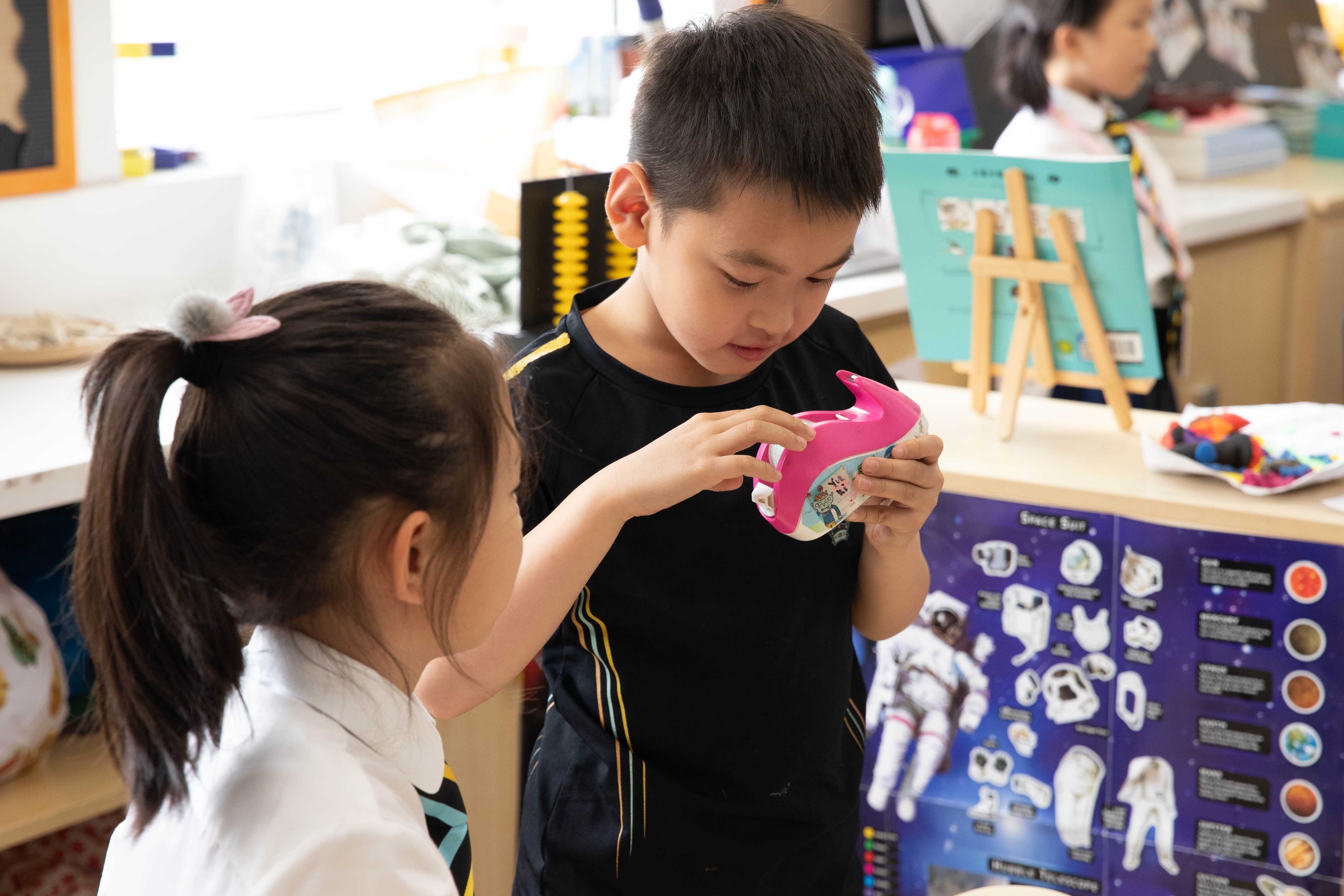
At Hiba Lower Primary, we put wellbeing and involvement at the forefront of our minds when making decisions. Happy, excited children who feel safe and want to learn are what you can see when you walk around our school.
If we've got wellbeing, we've got a lot. It indicates that everything that has to do with the child’s personal social and emotional development is going well.
- Dr. Ferre Laevers
1
What are the Leuven Scales?
The Leuven scales are a tool developed by a team based at the Research Centre for Experiential Education (Leuven University – Belgium) under Dr. Ferre Laevers in the 1980s.
There are two central indicators: wellbeing and involvement. Wellbeing refers to feeling at ease, being spontaneous and free of emotional tensions and is crucial to secure mental health. In addition, wellbeing is linked to self-confidence, a good degree of self-esteem and resilience. Involvement refers to being intensely engaged in activities and considered a necessary condition for deep level learning and development.
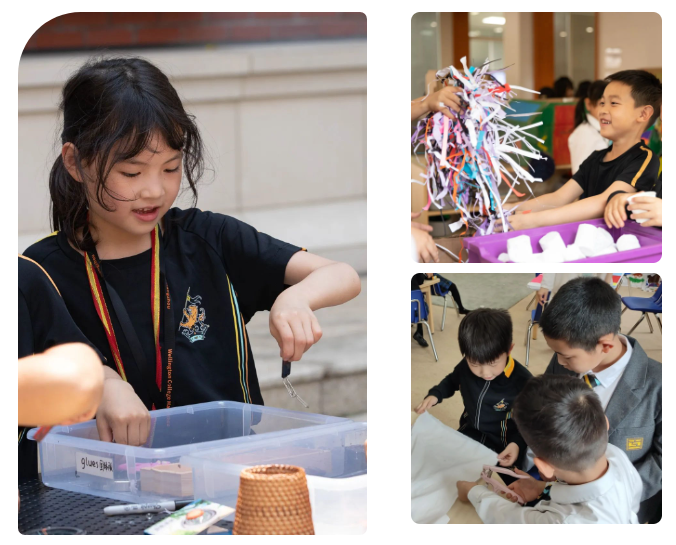
Keeping the emotional wellbeing at the forefront of our pedagogy and keeping teachers conscious of students' emotional wellbeing, the Leuven scale intentionally identifies how best to support an individual child, a key principle of Hiba School's Lower Primary philosophy.
We use three main components alongside our academic assessments; group screening or scanning, which allows us to gain an overall picture of the class and individuals in that class. The five-point scales for both wellbeing and involvement are considered and used to score the students, and there is the ten-point action.
The five-point scale
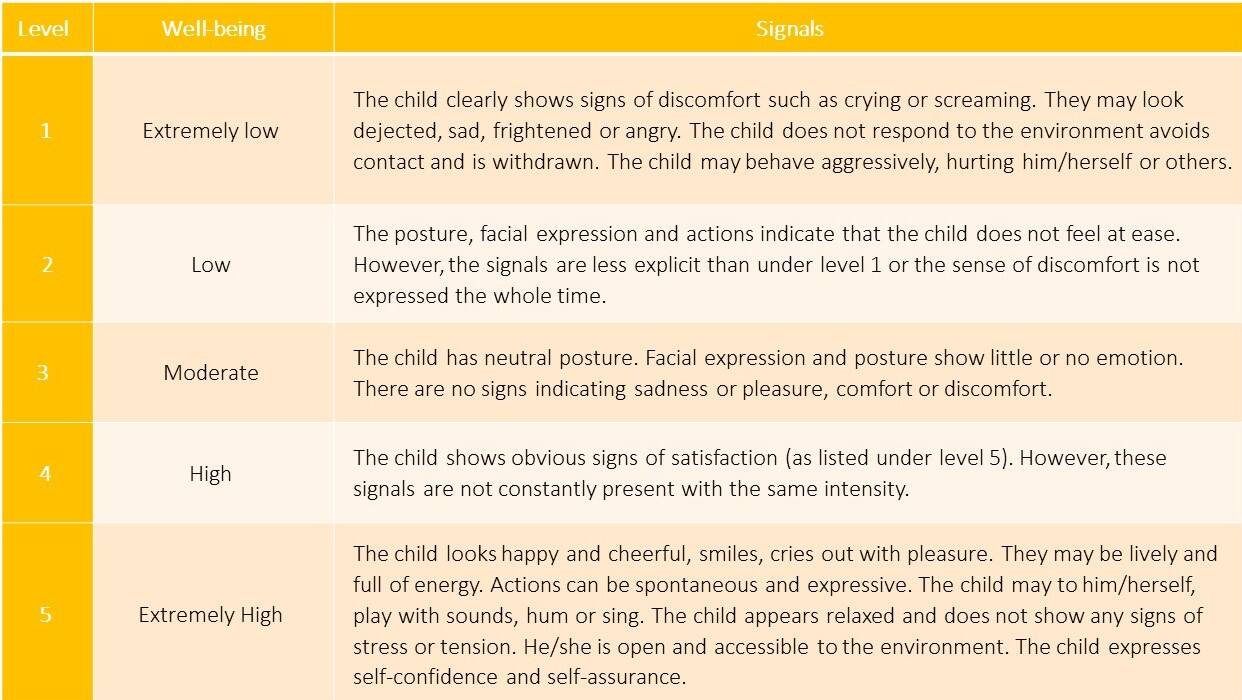
The Leuven Scale for Wellbeing
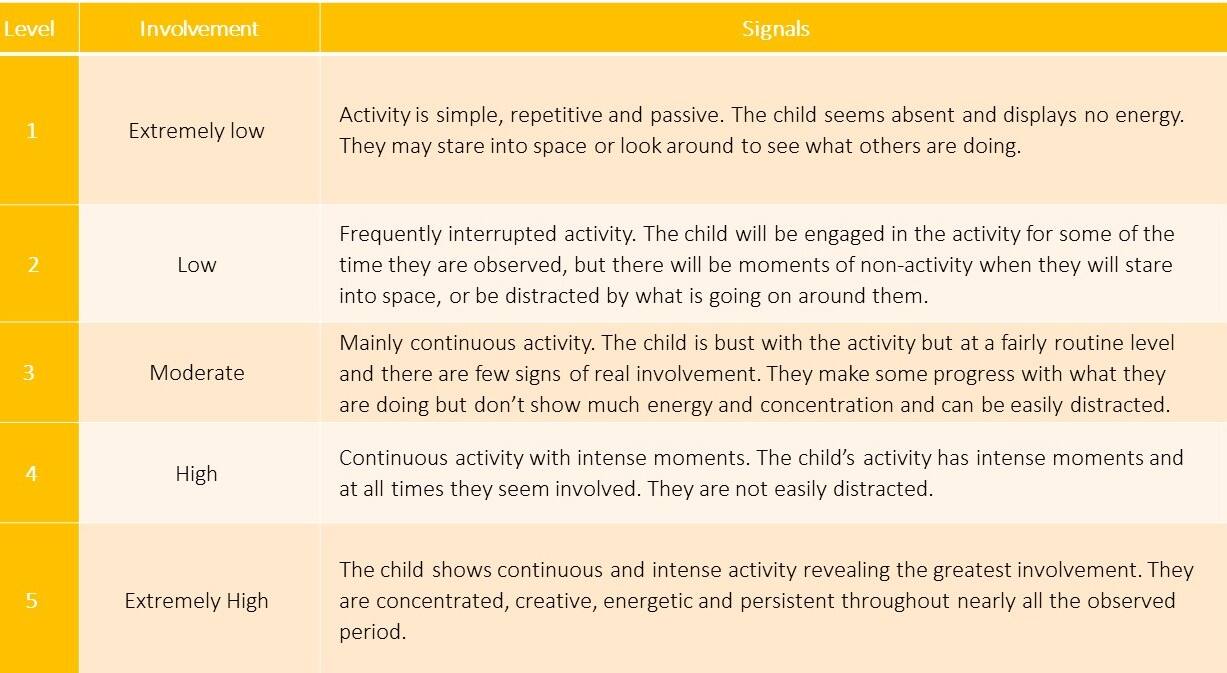
The Leuven Scale for Involvement
The scanning document
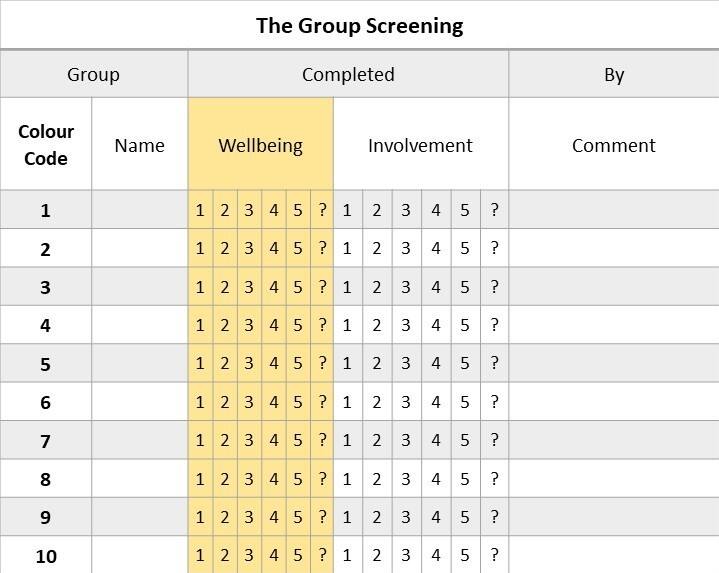
The ten-point checklist allows teachers to reflect on whether or not they have completed relevant actions to ensure the best possible outcomes for wellbeing and involvement. For example, teachers can reflect with their teams and leaders about the environment, equipment, and materials and ensure activities allow children space to explore feelings and emotions.
2
Assessing wellbeing and involvement
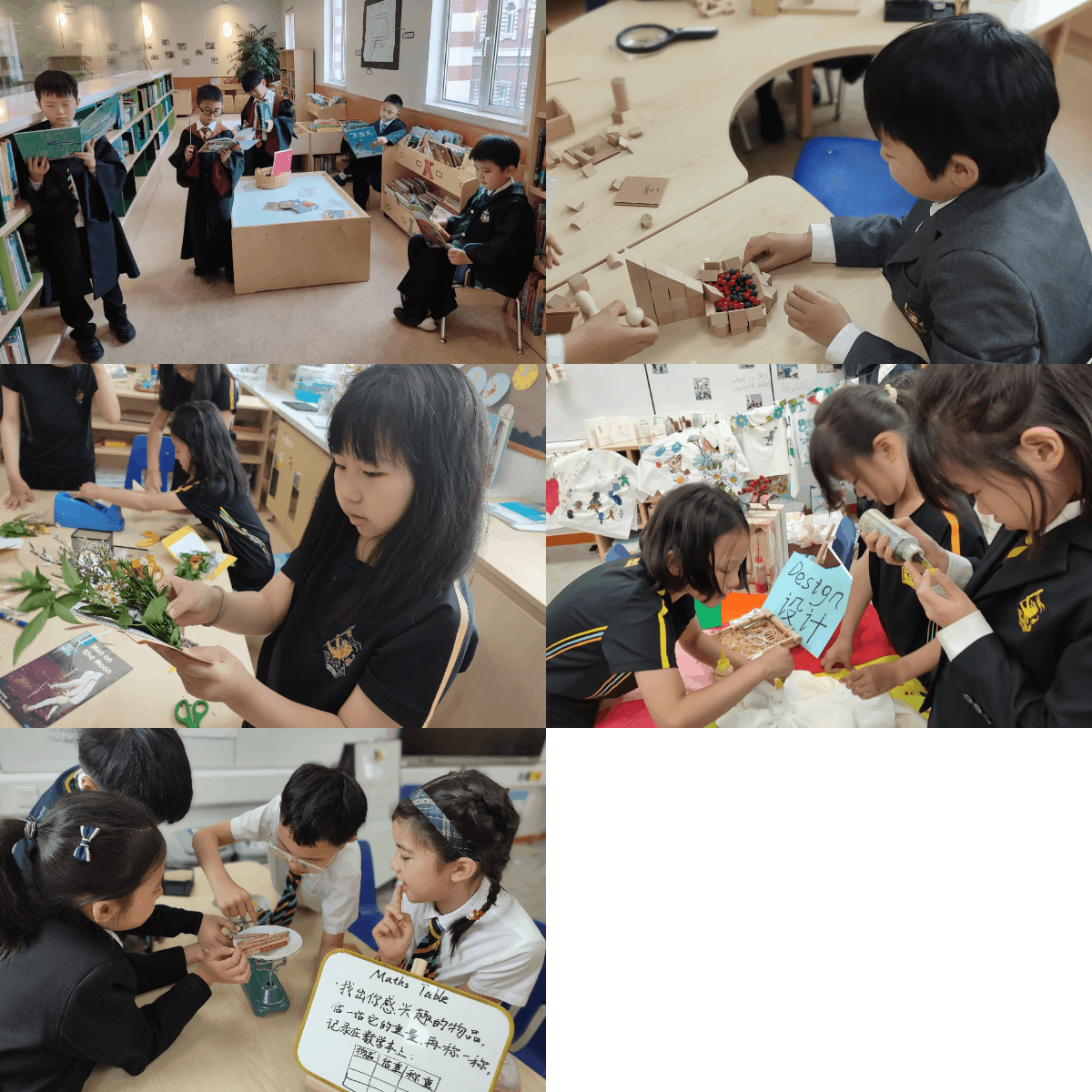
Using the five-point scale for both wellbeing and involvement, our teachers observe students regularly throughout the day to ascertain the general levels of wellbeing and involvement. Levels can change temporarily due to external influences such as a child being excited or sad. This can allow teachers to build deeper relationships with students by being aware of these changes. On a longer-term scale, teachers can understand what motivates their students and how to encourage them to reach that "deep level" learning regularly.
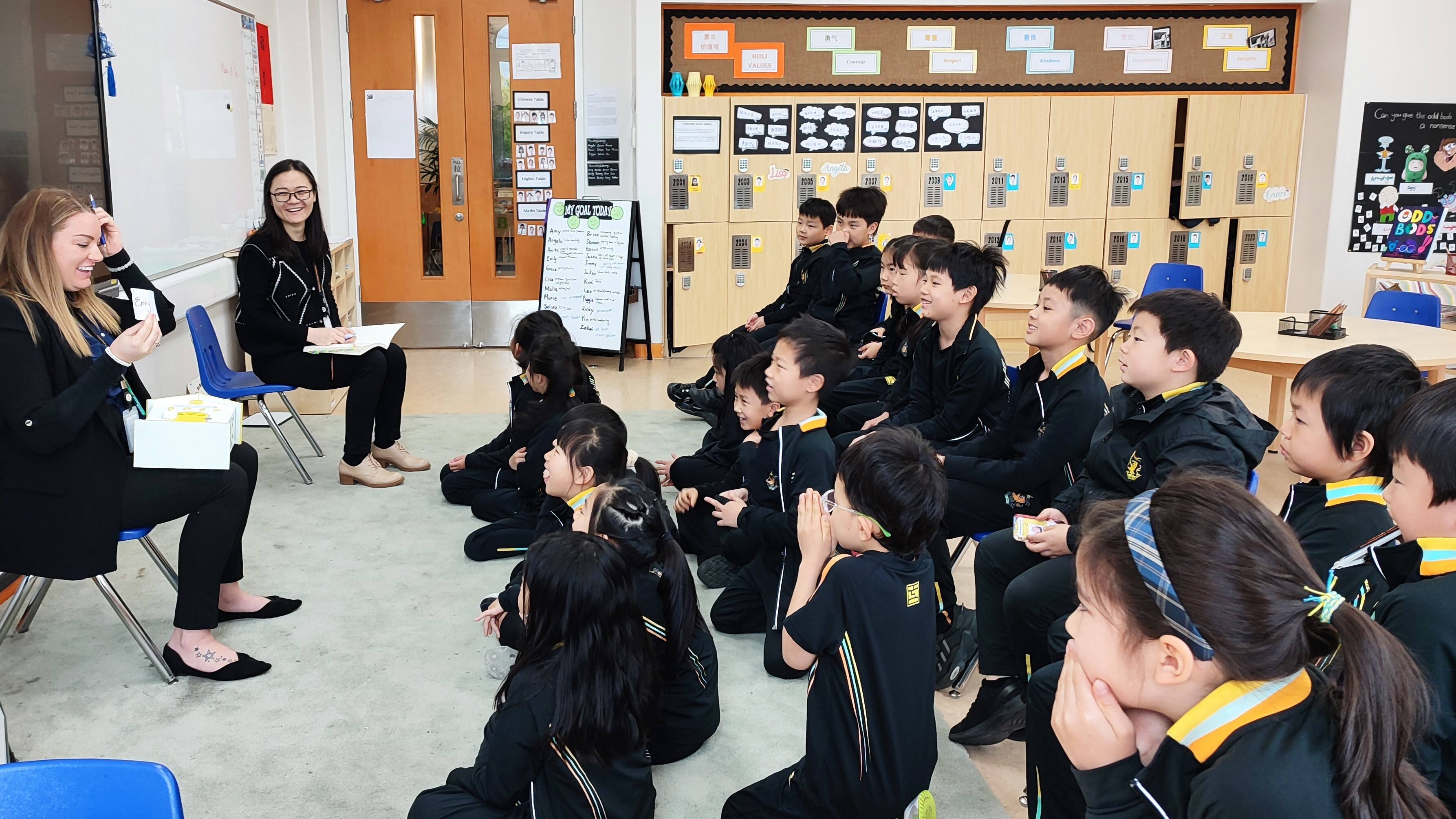
The observations can focus on groups of childrenor can be used to focus on a particular individual. Learning will be limited unlessa child is operating at 4 or 5. However, as mentioned, children cannot peak atlevels 4 or 5 all the time, and levels will fluctuate throughout the day.
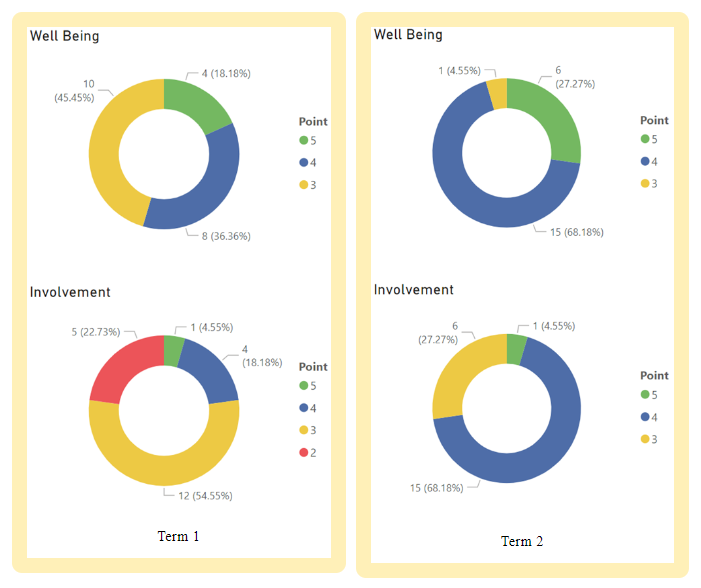
Over the time of children entering the class and throughout the year, teachers assess wellbeing and involvement through four main phases alongside their academics: baseline and at the end of the two terms. This allows for reflection and is in line with academic planning and ensures children are motivated to learn, reach their potential through deeper level learning and feel happy and safe with a sense of belonging, which is essentially the key to academic success in the foundational years of primary school.













Danielle Cook
Early Years SEN Lead
Wellbeing can be referred to as: feeling at ease, being spontaneous, and free of emotional tensions, and it is crucial to securing "mental health". Or better still, "like a fish in water", High levels of involvement and high levels of wellbeing are the perfect recipes for deep learning and development.
At Hiba Lower Primary, we put wellbeing and involvement at the forefront of our minds when making decisions. Happy, excited children who feel safe and want to learn are what you can see when you walk around our school.
If we've got wellbeing, we've got a lot. It indicates that everything that has to do with the child’s personal social and emotional development is going well.
- Dr. Ferre Laevers
1
What are the Leuven Scales?
The Leuven scales are a tool developed by a team based at the Research Centre for Experiential Education (Leuven University – Belgium) under Dr. Ferre Laevers in the 1980s.
There are two central indicators: wellbeing and involvement. Wellbeing refers to feeling at ease, being spontaneous and free of emotional tensions and is crucial to secure mental health. In addition, wellbeing is linked to self-confidence, a good degree of self-esteem and resilience. Involvement refers to being intensely engaged in activities and considered a necessary condition for deep level learning and development.
Keeping the emotional wellbeing at the forefront of our pedagogy and keeping teachers conscious of students' emotional wellbeing, the Leuven scale intentionally identifies how best to support an individual child, a key principle of Hiba School's Lower Primary philosophy.
We use three main components alongside our academic assessments; group screening or scanning, which allows us to gain an overall picture of the class and individuals in that class. The five-point scales for both wellbeing and involvement are considered and used to score the students, and there is the ten-point action.
The five-point scale
The Leuven Scale for Wellbeing
The Leuven Scale for Involvement
The scanning document
The ten-point checklist allows teachers to reflect on whether or not they have completed relevant actions to ensure the best possible outcomes for wellbeing and involvement. For example, teachers can reflect with their teams and leaders about the environment, equipment, and materials and ensure activities allow children space to explore feelings and emotions.
2
Assessing wellbeing and involvement
Using the five-point scale for both wellbeing and involvement, our teachers observe students regularly throughout the day to ascertain the general levels of wellbeing and involvement. Levels can change temporarily due to external influences such as a child being excited or sad. This can allow teachers to build deeper relationships with students by being aware of these changes. On a longer-term scale, teachers can understand what motivates their students and how to encourage them to reach that "deep level" learning regularly.
The observations can focus on groups of childrenor can be used to focus on a particular individual. Learning will be limited unlessa child is operating at 4 or 5. However, as mentioned, children cannot peak atlevels 4 or 5 all the time, and levels will fluctuate throughout the day.
Over the time of children entering the class and throughout the year, teachers assess wellbeing and involvement through four main phases alongside their academics: baseline and at the end of the two terms. This allows for reflection and is in line with academic planning and ensures children are motivated to learn, reach their potential through deeper level learning and feel happy and safe with a sense of belonging, which is essentially the key to academic success in the foundational years of primary school.